Government
Northeast Florida counties near 50% turnout on Election Day morning
By Katherine Langford
Advertisement · Why this ad?
Marcus manages the day-to-day editorial workflow across all brands, coordinating coverage assignments and ensuring editorial standards are met. He previously served as city editor at the Pioneer Press and holds a degree in Political Science from Carleton College.
More from Marcus →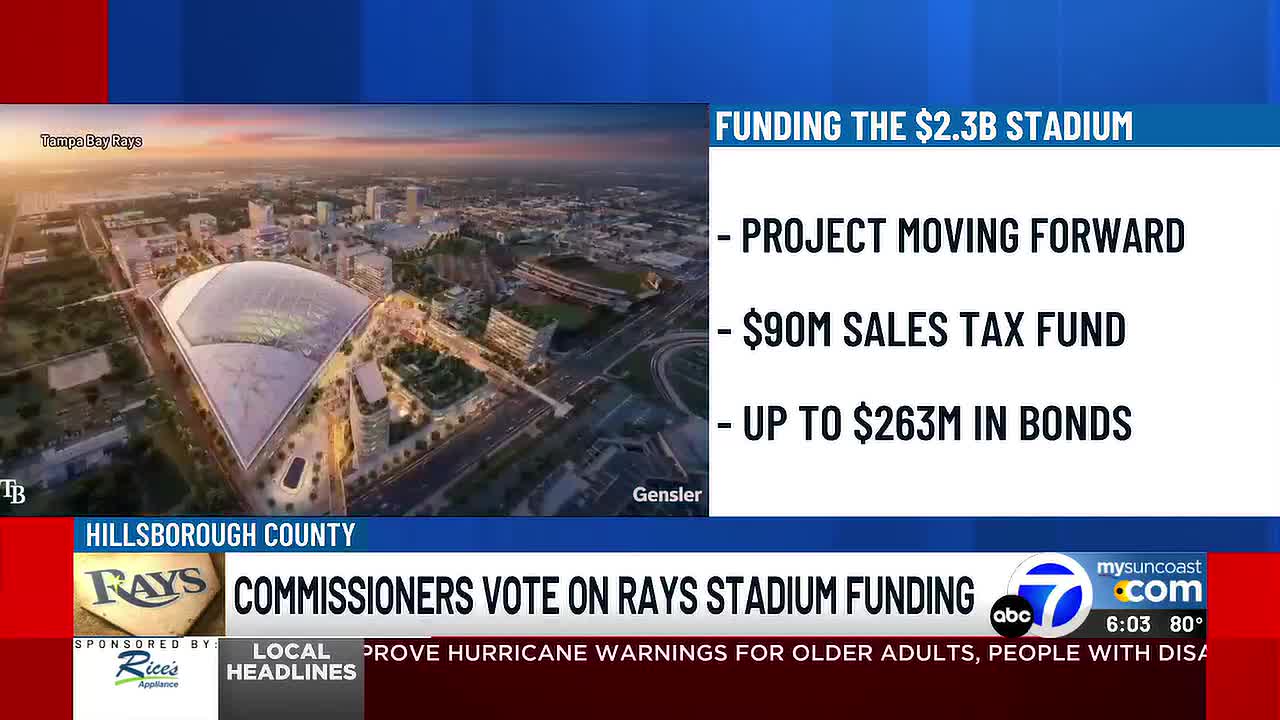
The promise of a new Tampa Bay Rays ballpark moved closer to reality this week as Hillsborough County commissioners authorized $90 million and approved $263 million in bonds, a total of $353 million, to advance the $2.3 billion project along Dale Mabry Highway. The funding packages, approved Tuesday, will contribute to a stadium envisioned on Hillsborough College property, but the path forward remains fraught with potential legal challenges and concerns about the county’s financial stability.
The Hillsborough County Commission’s decision included a $90 million appropriation from the extended Community Investment Tax (CIT) fund and authorization for $263 million in tourist development tax-backed bonds. This represents a significant portion of the overall funding required for the stadium, with the city of Tampa also committing $80 million through bonds. The county will eventually owe a total of $303 million for the stadium project. The use of the CIT funds has sparked debate, with some commissioners questioning its legality given that a voter referendum doesn't explicitly list stadiums as a potential use.
The approval process isn’t complete; another procedural vote is anticipated in two weeks, and the Tampa City Council still has several votes pending. While the initial $90 million CIT allocation was approved, commissioners must still address the remaining portion of the $360 million CIT ask. The city’s $80 million contribution also requires further approvals. Public speakers at the meeting voiced divided opinions, with some criticizing the project's cost and potential impact on community services. One speaker argued, “The voters of this county have just sent a clear, undeniable message. They are angry about overspending, and this current stadium needs to be completely unwound.”
The timing of the approval is complicated by Florida’s recent Amendment 3, which significantly increases the homestead exemption for eligible homeowners. The Florida Policy Institute estimates this change could create a revenue shortfall approaching $1 billion over two years for Hillsborough County. While the stadium funding is largely shielded from this impact due to reliance on tourist development and sales taxes, approximately $100 million of the county’s contribution will come from other county funds, exacerbating budget concerns. The county’s planned contribution is significantly larger than Tampa's, which has committed $80 million through bonds.
Hillsborough Commissioner Joshua Wostal, who lost his reelection bid, expressed skepticism about the project’s legality and voiced his intention to monitor its progress even after leaving office. “Don’t you worry,” Wostal said. “I’m about to have a lot more free time on my hands to ensure that the public is completely protected from this process. Don't you doubt that for a moment.” He anticipates legal challenges, though the county attorney disagrees with his assessment. Commissioner Harry Cohen, who supported the project, acknowledged the potential for legal action but emphasized the legal opinions supporting the use of CIT funds. “We covered ourselves pretty well with the legal opinions that we got that authorized the use of the CIT and determined that it was a permissible use,” Cohen stated.
Public testimony at the commission meeting highlighted the deep divisions within the community regarding the stadium project. Those opposed to the funding emphasized the potential strain on county resources and questioned the prioritization of a stadium over essential community services. Another speaker argued, “Our residents are demanding fiscal restraint, because they expect local government to spend responsibly on actual public needs.” Conversely, supporters pointed to the potential for job creation and economic benefits. “Nothing says community more than providing stable, good-paying jobs,” one supporter said. The Tampa City Council previously approved a community benefits agreement tied to the ballpark project, promising investments in local neighborhoods and services.
The Hillsborough County Commission will hold another procedural vote in approximately two weeks to further advance the stadium funding. The Tampa City Council also has several more votes pending before all funding is approved. The county attorney has written legal opinions that disagree with Wostal’s concerns about the use of CIT funds, and the commission expects that a legal challenge may arise. The project’s progress is intertwined with the county’s financial outlook, particularly in light of Amendment 3 and its anticipated impact on property tax revenue. While the stadium’s funding is primarily reliant on tourist development and sales taxes, the $100 million contribution from other county funds remains a point of concern. The county’s overall financial health will be a key factor as the project moves forward, especially given the potential for legal challenges and the need to balance stadium funding with other essential community needs. Hillsborough County residents should monitor future commission meetings and city council proceedings for updates.
The approval of this stadium funding represents a significant investment in Tampa Bay’s future, but it also underscores the precariousness of relying on public funds for private ventures. While the promise of jobs and economic growth is enticing, the potential for financial strain on the county, especially with Amendment 3 looming, is a serious concern. It’s a reminder that even well-intentioned projects can have unintended consequences, and that fiscal prudence should always be paramount. The commitment from Commissioner Wostal to ensure public protection signals a healthy skepticism that residents should share. Strong families and thriving communities depend on responsible stewardship of resources, and it's vital that this project doesn’t come at the expense of essential services or burden taxpayers unnecessarily. The long-term success of this stadium will depend not only on its ability to draw fans but also on its ability to contribute positively to the financial health and stability of Hillsborough County. The legal challenges anticipated by Wostal are worth watching closely, as they could reshape the entire project.
The approval of the Rays stadium funding marks a pivotal moment for Tampa Bay, but it also serves as a stark reminder of the importance of responsible governance and community engagement. As the project moves forward, residents should remain vigilant, ensuring that their voices are heard and that their concerns are addressed. The future of this stadium, and the financial stability of Hillsborough County, depends on it.
By Katherine Langford

By Marcus Chen

By Katherine Langford

By Katherine Langford